
Maharaja Ganga Singh University (MGSU), Bikaner – Law Studies
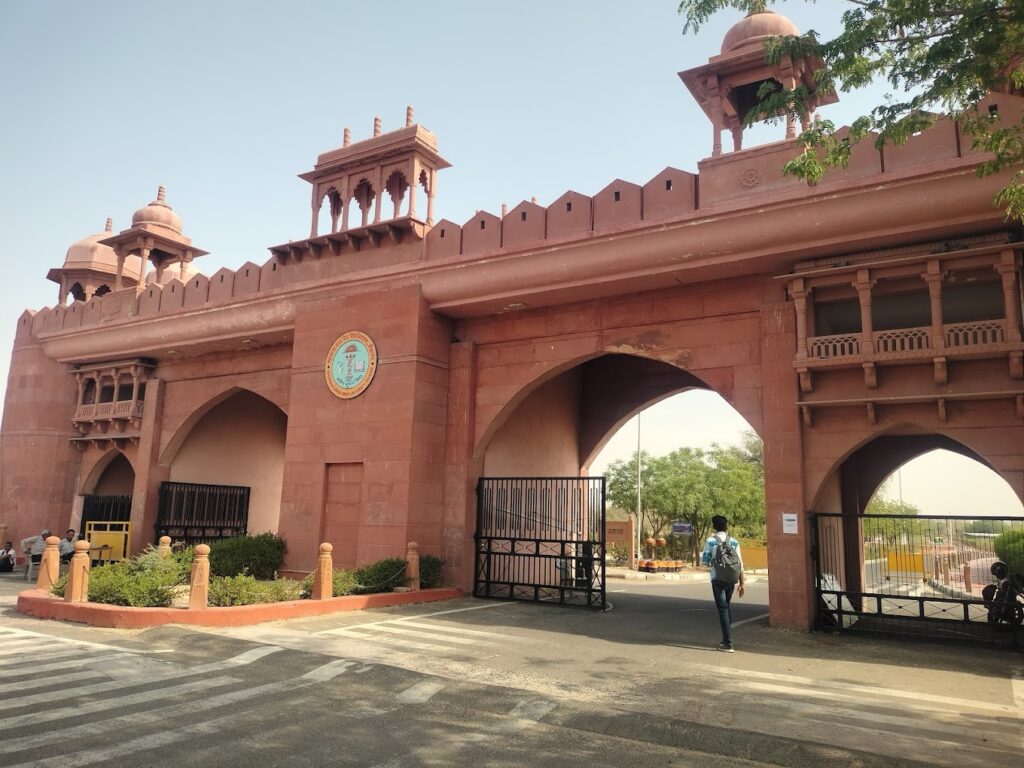
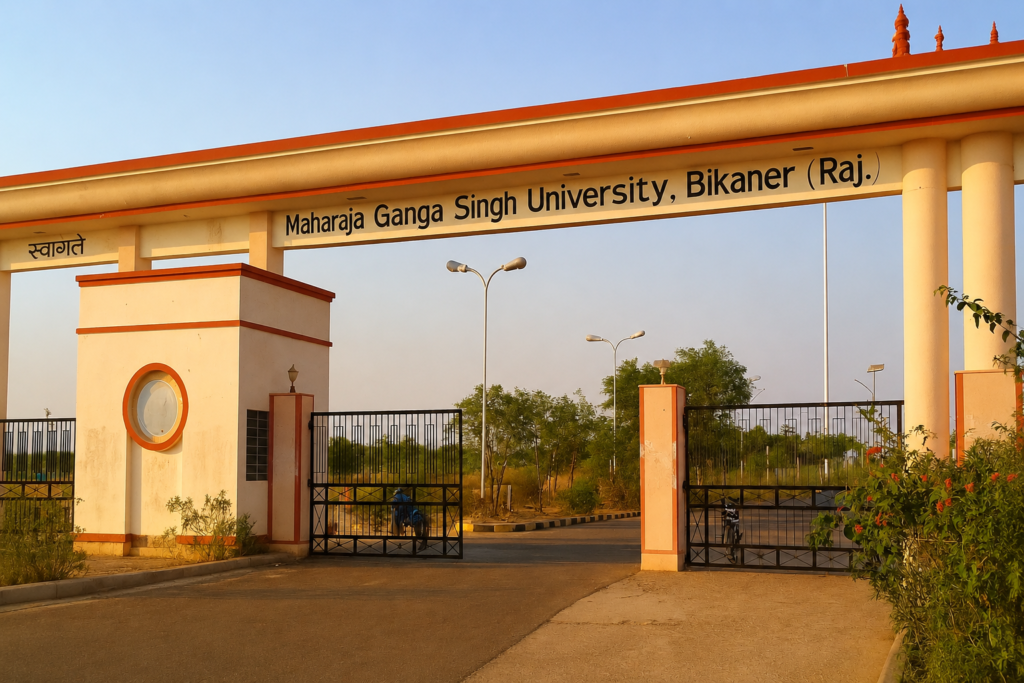

Description
About Maharaja Ganga Singh University, Bikaner
Verified by Lawsection.in Editorial Team | Updated: April 07, 2026
Maharaja Ganga Singh University (MGSU), Bikaner, is a public state university established under the University of Bikaner Act, 2003 (Act No. 13 of 2003). Subsequently, the Government of Rajasthan renamed the institution Maharaja Ganga Singh University in 2009. Since then, the university has continued to expand higher education across western Rajasthan through its academic departments and affiliated colleges.
The School of Law at MGSU offers legal education through undergraduate and postgraduate programmes, while several affiliated law colleges extend the university’s academic reach across the Bikaner Division. At present, the School of Law offers LL.B. (3-Year), B.A. LL.B. (Hons.), LL.M., and Post Graduate Diploma in Legal and Forensic Sciences. These programmes follow the applicable academic framework prescribed by the university and the Bar Council of India for legal education.
Furthermore, Maharaja Ganga Singh University is recognised under Sections 2(f) and 12(B) of the UGC Act, 1956 and is also a member of the Association of Indian Universities (AIU). As a result, the university has established itself as an important public institution for students seeking affordable legal education, judiciary preparation, litigation-oriented studies, and higher legal education in Rajasthan.
University Snapshot
Location
Bikaner, Rajasthan, India
Type
Public State University
Established
2003
Established Under
University of Bikaner Act, 2003 (Act No. 13 of 2003)
Renamed
Maharaja Ganga Singh University (2009)
UGC Recognition
Recognised under Sections 2(f) & 12(B) of the UGC Act, 1956
AIU Membership
Yes
NAAC Accreditation
Grade ‘C’ (Latest Available Cycle)
NIRF Law Ranking
Not Ranked in NIRF Law Category
Admission Session
Generally July–August (Subject to Official Notification)
Law Programs Offered by the University
The School of Law at Maharaja Ganga Singh University currently offers undergraduate, postgraduate, and diploma programmes in legal education. However, the university may revise programme availability, eligibility requirements, admission schedules, or seat intake from time to time. Therefore, applicants should always verify the latest admission notification before submitting an application.
LL.B. Programme
Duration: 3 Years
Eligibility: Bachelor’s degree from a recognised university as prescribed in the admission notification
Admission Process: Merit-based, subject to the university’s admission rules and counselling process
Course Structure: Semester System
Programme Mode: Full-Time
Approx Fees: Refer to the latest university admission notification
Current Availability: Offered by the School of Law (subject to the latest admission notification)
B.A. LL.B. (Hons.) Programme
Duration: 5 Years (Integrated)
Eligibility: 10+2 or equivalent qualification from a recognised board in accordance with the university admission notification
Admission Process: Merit-based, as notified by the university
Course Structure: Integrated Honours Programme
Programme Mode: Full-Time
Approx Fees: Refer to the latest official admission notification
Current Availability: Offered by the School of Law (subject to the latest admission notification)
LL.M. Programme
Duration: 2 Years
Eligibility: LL.B. degree from a recognised university in accordance with the university’s eligibility criteria
Admission Process: Merit-based admission and counselling as notified by the university
Course Structure: Semester System
Programme Mode: Full-Time
Specialisations: As offered by the School of Law for the relevant academic session
Approx Fees: Refer to the latest university notification
Current Availability: Offered by the School of Law
Post Graduate Diploma in Legal and Forensic Sciences
Duration: 1 Year
Eligibility: Graduation from a recognised university
Admission Process: Merit-based according to the university admission notification
Course Mode: Full-Time
Fee Structure: As prescribed by the university for the relevant academic session
Current Availability: Offered by the School of Law
The university also conducts doctoral admissions through its Directorate of Research in accordance with the applicable Ph.D. admission regulations. However, applicants interested in doctoral studies in Law should verify the latest admission notification and programme availability on the official university website before applying.
Note: Programme availability, eligibility criteria, admission procedures, fee structure, seat intake, and academic regulations may change from one admission cycle to another. Therefore, applicants should always refer to the latest official admission notification issued by Maharaja Ganga Singh University before submitting an application. Lawsection publishes this information for general educational purposes and does not guarantee future revisions made by the university.
Recognition & Accreditation
Maharaja Ganga Singh University holds statutory recognition and institutional approvals from the relevant higher education authorities. Key recognitions include:
- Recognised under Sections 2(f) and 12(B) of the UGC Act, 1956
- Established under the University of Bikaner Act, 2003 (Act No. 13 of 2003)
- Renamed Maharaja Ganga Singh University by the Government of Rajasthan in 2009
- Member of the Association of Indian Universities (AIU)
- Accredited by NAAC with Grade ‘C’ (latest available accreditation cycle)
- Law programmes are offered in accordance with the applicable Bar Council of India legal education framework.
Why Choose Maharaja Ganga Singh University for Law?
Students considering legal education in western Rajasthan may choose Maharaja Ganga Singh University for several academic and practical reasons.
- Offers recognised undergraduate, postgraduate, and diploma programmes in law.
- Provides legal education through a recognised public state university.
- Maintains recognition under the UGC Act and membership of the Association of Indian Universities.
- Supports students interested in litigation, judiciary preparation, legal research, and higher legal studies.
- Extends legal education through affiliated colleges across the Bikaner Division.
- Encourages participation in academic activities such as moot courts, seminars, internships, legal awareness programmes, and research initiatives through the School of Law.
Rankings & Reputation
Maharaja Ganga Singh University is an established public university serving western Rajasthan through its constituent departments and affiliated colleges. Although the university is not currently ranked in the NIRF Law category, it continues to play an important role in providing accessible legal education across the region.
The School of Law promotes experiential legal education through activities such as moot court competitions, seminars, workshops, legal awareness programmes, internships, and academic initiatives, as reflected in the department’s academic vision and development plans. Furthermore, the university continues to strengthen its legal education framework by expanding academic opportunities in accordance with its institutional objectives.
Students primarily interested in affordable legal education, litigation, judiciary preparation, or higher legal studies may find MGSU an appropriate choice after carefully comparing programme structure, faculty, infrastructure, admission criteria, and career opportunities with other recognised law institutions.
Documents Required for Admission at Maharaja Ganga Singh University, Bikaner
Applicants seeking admission to law programmes at Maharaja Ganga Singh University should keep the required academic and identity documents ready before the counselling and verification process. However, the university may request additional documents depending on the programme, admission category, or the latest admission notification.
The commonly required documents include:
- Class 10 Marksheet and Certificate
- Class 12 Marksheet and Certificate
- Graduation Marksheet and Degree Certificate (for LL.B. applicants)
- LL.B. Degree and Semester Marksheets (for LL.M. applicants)
- Transfer Certificate (TC)
- Migration Certificate (if applicable)
- Character Certificate
- Caste or Category Certificate (if applicable)
- Economically Weaker Section (EWS) Certificate, wherever applicable
- Passport-size Photographs
- Aadhaar Card or any other valid Government-issued Photo ID
- Domicile Certificate, if required under the applicable admission policy
Note: Applicants should carefully verify the latest document checklist published in the official admission notification before reporting for counselling or document verification.
Admission Procedure at Maharaja Ganga Singh University, Bikaner
Maharaja Ganga Singh University generally follows a merit-based admission process for its law programmes. However, applicants should always refer to the latest admission notification because the university may revise the admission schedule, eligibility requirements, counselling process, or document verification procedure for each academic session.
The admission process generally follows these steps:
Step 1: Choose the Appropriate Law Programme
First, applicants should select the law programme that matches their academic qualifications and career objectives, such as LL.B., B.A. LL.B. (Hons.), LL.M., or the Post Graduate Diploma in Legal and Forensic Sciences.
Step 2: Verify Eligibility Criteria
Next, candidates should carefully review the eligibility requirements, important dates, reservation policy, and admission instructions published by the university before submitting an application.
Step 3: Submit the Application Form
After confirming their eligibility, applicants should complete the online or offline application process, as prescribed by the university, and upload or submit all required academic and supporting documents within the specified deadline.
Step 4: Merit List and Counselling
Subsequently, the university prepares the merit list according to the applicable admission rules for the relevant programme. Shortlisted candidates are then invited to participate in counselling and document verification.
Step 5: Document Verification
During counselling, university officials verify the applicant’s educational qualifications, identity documents, category certificates, and other supporting records before confirming eligibility for admission.
Step 6: Fee Payment and Admission Confirmation
Finally, selected candidates must complete the prescribed admission formalities and pay the applicable fee within the notified deadline. Once all requirements are fulfilled successfully, the university confirms admission to the respective programme.
Application Process for International Students (If Applicable)
Maharaja Ganga Singh University does not currently publish a dedicated admission procedure for international applicants on its official website. Therefore, prospective international students should directly contact the university’s admission office before submitting an application.
Generally, international applicants may need to:
- Verify programme availability for international candidates.
- Confirm eligibility and academic equivalence requirements.
- Submit academic transcripts and supporting documents as prescribed by the university.
- Obtain the necessary student visa and immigration documents after receiving admission, wherever applicable.
- Complete any additional formalities communicated by the university before joining the programme.
As the university does not currently publish a separate international admission policy, prospective international applicants should obtain written confirmation from the university regarding eligibility, documentation, visa requirements, and admission procedures before applying.
Best Law Institutes in Bikaner and Nearby Locations
Bikaner and the surrounding regions of Rajasthan offer several recognised institutions for students interested in pursuing legal education. Whether you are planning to study LL.B., B.A. LL.B. (Hons.), LL.M., or other law programmes, comparing multiple institutions can help you choose the right university based on academic reputation, faculty, infrastructure, Bar Council of India (BCI) recognition, career opportunities, and overall learning environment.
Students should also evaluate factors such as admission process, eligibility criteria, curriculum, internships, moot court exposure, legal aid activities, research opportunities, campus facilities, affordability, and long-term career goals before making a final decision.
Some of the leading law institutes in Bikaner and nearby locations include:
- Maharaja Ganga Singh University (MGSU), Bikaner
- Tantia University – School of Law, Sri Ganganagar
- Dr. Bhimrao Ambedkar Law University, Jaipur
- Faculty of Law, University of Rajasthan, Jaipur
- National Law University Jodhpur (NLUJ), Jodhpur
- School of Law, JECRC University, Jaipur
Compare Before You Apply
Before applying to any law institute, compare admission requirements, eligibility criteria, university recognition, Bar Council of India (BCI) approval, faculty expertise, curriculum, fee structure, internships, placement support, research opportunities, campus facilities, and career outcomes. Evaluating multiple institutions can help you select a law school that best matches your academic interests and long-term professional goals.
Frequently Asked Questions (FAQs)
Q1. Is Maharaja Ganga Singh University a good choice for law studies in Rajasthan?
Yes. Maharaja Ganga Singh University is a recognised public state university that offers affordable legal education through its School of Law and affiliated colleges. It is particularly suitable for students interested in litigation, judiciary preparation, and higher legal studies in Rajasthan.
Q2. Can students from other states apply for law admission at MGSU?
Yes. Students from other Indian states may apply for eligible law programmes at MGSU, subject to the university’s admission rules, eligibility criteria, and seat availability for the relevant academic session.
Q3. Does Maharaja Ganga Singh University provide placement support for law students?
The university supports students through various academic and professional development activities. However, applicants should contact the School of Law directly for the latest information regarding internships, career guidance, and placement-related initiatives.
Q4. Are internships and moot court activities available for law students at MGSU?
Yes. The School of Law encourages students to participate in moot court competitions, seminars, workshops, legal aid programmes, internships, and other practical learning activities to strengthen their legal skills.
Q5. How should students choose between MGSU and other law universities in Rajasthan?
Students should compare factors such as university recognition, programme offerings, faculty, admission process, affordability, infrastructure, internship opportunities, and career goals before making a final decision.
Study LLM Abroad: Top Law Universities in UK, USA & Canada
Planning to pursue an LLM abroad? Explore carefully curated and verified guides to top-ranked law universities in the United Kingdom, United States, and Canada. These country-wise pages provide structured information on admission requirements, eligibility criteria, tuition fees, intakes, scholarships, and career prospects — based on official university sources and updated as of 2026. Compare destinations confidently and choose the best pathway for your global legal career.
LLM In UK
Find the best Law Universities in United Kingdom.
LLM In USA
Explore Top-ranked Law Universities in the USA.
LLM in Canada
Canada’s Top-ranked Law Universities listed here.
This information is curated by Lawsection’s editorial team as part of our Study Law Abroad and Global Law College Directory initiatives.
This directory has been prepared using information available from the official website of Maharaja Ganga Singh University, official university notifications, the University Grants Commission (UGC), the applicable Bar Council of India (BCI) legal education framework, and other publicly available government or institutional sources available at the time of publication.
Although every reasonable effort has been made to ensure factual accuracy, universities may revise admission policies, eligibility criteria, programme offerings, fee structures, academic regulations, accreditation status, or other institutional information without prior notice. Accordingly, applicants should always verify the latest information directly through the official university website before making any admission-related decision.
Address






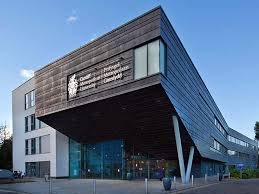
Cardiff Metropolitan University, UK – Law Courses, Fees, Eligibility, Admissions 2026
- Government
- LLB (3 Years), LLM Abroad, Juris Doctor (JD), PhD in Law
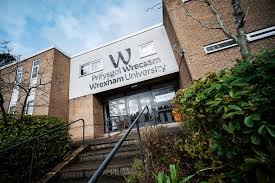



Wrexham University Law Courses in UK (2026): Fees, Entry Requirements, Admissions & Student Guide
- Government
- LLB (3 Years), LLM Abroad, Juris Doctor (JD), PhD in Law



Cardiff University, UK – Law Courses, Fees, Admission Requirements & Study Opportunities (2026)
- Government
- LLB (3 Years), LLM Abroad, Juris Doctor (JD), PhD in Law


Swansea University Law School (UK): Courses, Fees, Eligibility, Admissions, Rankings & Study Guide 2026
- Government
- LLB (3 Years), LLM Abroad, Juris Doctor (JD), PhD in Law
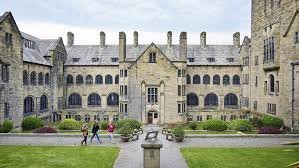


Bangor University, UK – Law Courses, Fees, Eligibility, Admissions & Bangor Law School Guide (2026)
- Government
- LLB (3 Years), LLM Abroad, Juris Doctor (JD), PhD in Law



Queensland University of Technology Law School Australia: Courses, Fees, Eligibility, Admissions & Career Opportunities 2026
- Government
- LLB (3 Years), LLM Abroad, Juris Doctor (JD), Doctor of Juridicial Science (S.J.D), PhD in Law



Griffith University, Australia – Complete Guide to Law Programs, Fees, Eligibility, Campuses & Admissions (2026)
- Government
- LLB (3 Years), LLM Abroad, Juris Doctor (JD), Doctor of Juridicial Science (S.J.D), PhD in Law
